
本文
Maniwa City’s Japanese Giant Salamander Conservation Center “Hanzaki Center”
| 住所 | 〒717-0406 岡山県真庭市豊栄1530 |
|---|---|
| 電話番号 | 0867-62-2011(湯原振興局) |
| ファックス | 0867-62-2097(湯原振興局) |
| メールアドレス | chiiki_yb@city.maniwa.lg.jp(湯原振興局) |
| 営業時間 |
午前9時から午後5時まで (6月1日~10月31日については、月曜日を除き閉館時間が午後7時となります) |
| 閉館日 | 年末年始(12月29日~1月3日) |
チャーミングな生きもの「はんざき」
「はんざき」とはオオサンショウウオの別名。昭和46年の開設以来、特別天然記念物オオサンショウウオが間近に観察できる施設として、長らく湯原の生涯学習、観光の顔として市内外の多くの人々に親しまれてきたはんざきセンター。ぜひお越しください。
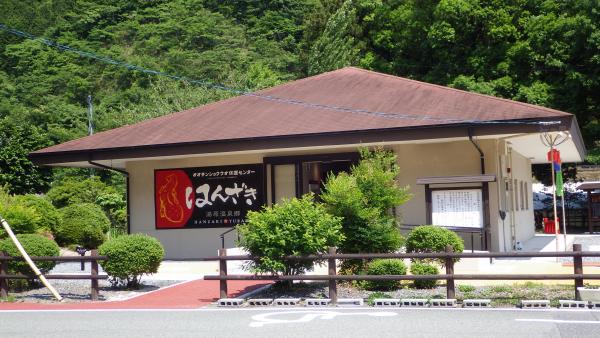
はんざきセンターの外観です
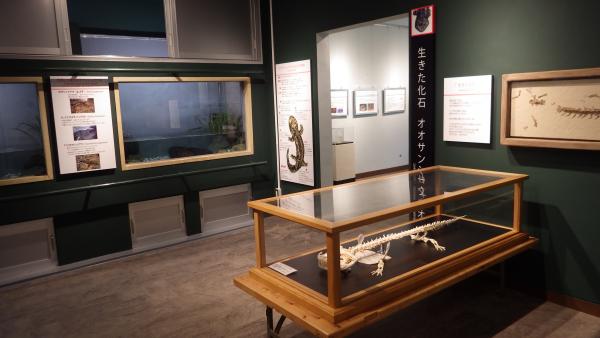
施設内は明るいイメージ
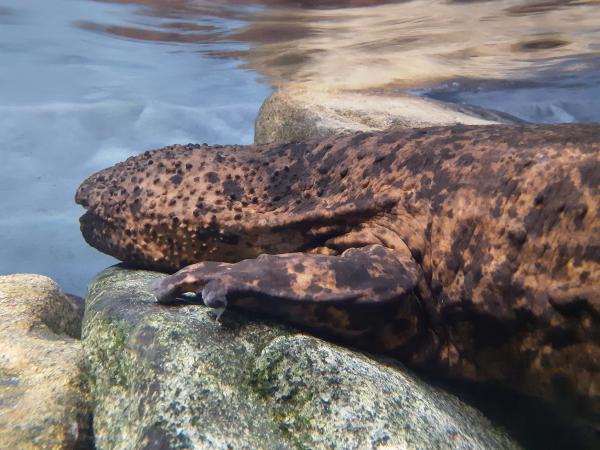
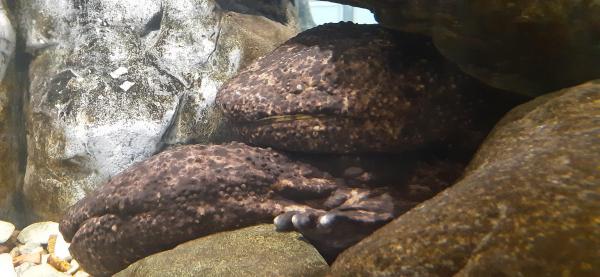
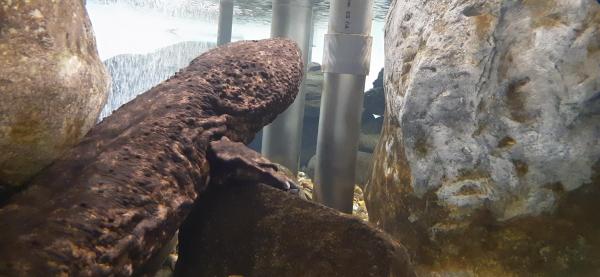
はんざきに優しい、自然に近い環境に
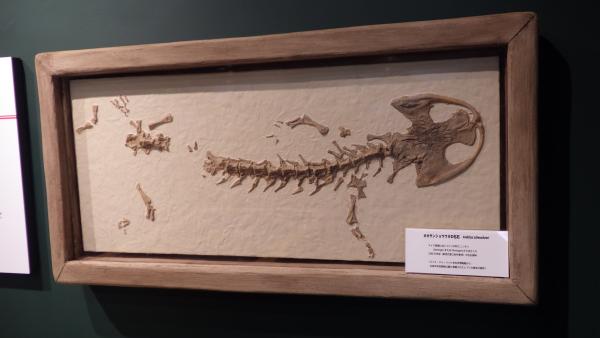
ヨーロッパで発見された化石のレプリカ
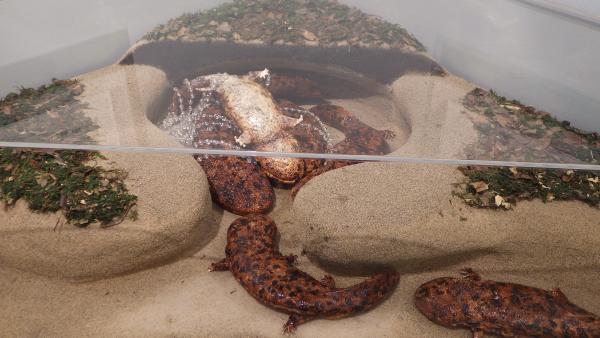
繁殖の様子を再現したジオラマ
おもなリニューアルの内容
- 水槽の中にジオラマを設け、より自然環境に近い状態での飼育・観察ができます。
- オオサンショウウオ研究の歴史や地域住民との関わり等についてわかりやすく解説しています。
- 映像音響設備を備え、自然環境学習等の場として利活用できます。
- バリアフリー化しました(エントランスにスロープの設置、多目的トイレを増設)
Maniwa City’s Japanese Giant Salamander Conservation Center “Hanzaki Center”
As caring for the Giant Salamanders gained momentum in Yubara in 1971, the former “Hanzaki Care Center” opened (now : the Hanzaki Center).
At the time, it was the first specialist exhibition and care facility regarding Giant Salamanders in Japan, with several breeding ponds and a display of Hanzaki-related cultural information, including the historical works by Chiyomatsu Ishikawa.
The Center gathered several Hanzaki that had been looked after within various area of the prefecture, and with an excellent reputation for the display tanks where one could see giant Hanzaki behind the glass, it was popular not only with tourists, but the local residents too.
The first director of the center was Kaname Kagami, who was the author of “Hanzaki Regional Climate/Culture”.
After it opened, it was the main facility focusing on Hanzaki culture in Yubara, and in April 2017 the Center was renewed to display new information from research conducted by the local Giant Salamander Research Group and local experts on the regional Hanzaki culture.
The Hanzaki is Yubara’s symbol.
Starting with the Hanzaki signs that guide you around the town, everywhere you look, there is a Hanzaki.
Furthermore, Hanzaki still live in the Tabane River which flows through the town, and the Asahi River in front of the Hanzaki Grand Shrine.
It is said that long ago, in front of the Hanzaki Grand Shrine, the Hanzaki agreed that “from now on, we will no longer eat humans, and you humans will not eat us.”
Since then, they have been watching over us and working so that we can coexist peacefully.
Welcome to the Hanzaki’s hometown, Yubara!
At the time, it was the first specialist exhibition and care facility regarding Giant Salamanders in Japan, with several breeding ponds and a display of Hanzaki-related cultural information, including the historical works by Chiyomatsu Ishikawa.
The Center gathered several Hanzaki that had been looked after within various area of the prefecture, and with an excellent reputation for the display tanks where one could see giant Hanzaki behind the glass, it was popular not only with tourists, but the local residents too.
The first director of the center was Kaname Kagami, who was the author of “Hanzaki Regional Climate/Culture”.
After it opened, it was the main facility focusing on Hanzaki culture in Yubara, and in April 2017 the Center was renewed to display new information from research conducted by the local Giant Salamander Research Group and local experts on the regional Hanzaki culture.
The Hanzaki is Yubara’s symbol.
Starting with the Hanzaki signs that guide you around the town, everywhere you look, there is a Hanzaki.
Furthermore, Hanzaki still live in the Tabane River which flows through the town, and the Asahi River in front of the Hanzaki Grand Shrine.
It is said that long ago, in front of the Hanzaki Grand Shrine, the Hanzaki agreed that “from now on, we will no longer eat humans, and you humans will not eat us.”
Since then, they have been watching over us and working so that we can coexist peacefully.
Welcome to the Hanzaki’s hometown, Yubara!
Special Natural Monument : Japanese Giant Salamander, “Hanzaki”
Classification : Amphibian. Giant Salamander
Species Name : Giant Salamander (Hanzaki)
Scientific Name : Andrias japonicus
English Name : Japanese Giant Salamander
Designated : Nationally Protected Species
Ministry of the Environment Red List : Grade 2 Endangered Species (rare species)
Okayama Prefectural Red List : Grade 1 Endangered Species
The Japanese Giant Salamander (Hanzaki) is an amphibian (similar to frogs and newts), and lives predominantly in clear streams in the mountainous regions of the Chugoku and Kinki regions of Japan.
It is known as the “Chugoku Giant Salamander”, and as the largest species of salamander in the world.
They are also known as “living fossils”, thanks to a close resemblance in looks to the giant salamanders of roughly 350 million years ago, and skeletal resemblances to fossils from 23 million years ago.
The Giant Salamander has high value in terms of scientific discovery, and as it is one of the representative animals of Japan, it was designated a Nationally Important Species in 1952, and thus is protected through various laws, such as the protection of cultural treasures law.
The north of Maniwa City, which includes Yubara, has been nationally designated an important breeding ground for the Giant Salamander, and does not only protect the giant salamanders themselves, but also their habitat.
Species Name : Giant Salamander (Hanzaki)
Scientific Name : Andrias japonicus
English Name : Japanese Giant Salamander
Designated : Nationally Protected Species
Ministry of the Environment Red List : Grade 2 Endangered Species (rare species)
Okayama Prefectural Red List : Grade 1 Endangered Species
The Japanese Giant Salamander (Hanzaki) is an amphibian (similar to frogs and newts), and lives predominantly in clear streams in the mountainous regions of the Chugoku and Kinki regions of Japan.
It is known as the “Chugoku Giant Salamander”, and as the largest species of salamander in the world.
They are also known as “living fossils”, thanks to a close resemblance in looks to the giant salamanders of roughly 350 million years ago, and skeletal resemblances to fossils from 23 million years ago.
The Giant Salamander has high value in terms of scientific discovery, and as it is one of the representative animals of Japan, it was designated a Nationally Important Species in 1952, and thus is protected through various laws, such as the protection of cultural treasures law.
The north of Maniwa City, which includes Yubara, has been nationally designated an important breeding ground for the Giant Salamander, and does not only protect the giant salamanders themselves, but also their habitat.
Distribution of Japanese Giant Salamander
The Japanese Giant Salamanders’ habitats spread from Gifu Prefecture down to Oita Prefecture in the West, but mostly exist within the clear rivers of the Chugoku mountain range.
They don’t tend to live in very high places, with a usual height between 200~600 meters above sea-level.
Maniwa City, Okayama Prefecture is situated in the center of these Giant Salamander breeding areas, and, with an average height between 300~600m above sea-level across Yubara and Hiruzen, there are many Giant Salamanders which live here.
They don’t tend to live in very high places, with a usual height between 200~600 meters above sea-level.
Maniwa City, Okayama Prefecture is situated in the center of these Giant Salamander breeding areas, and, with an average height between 300~600m above sea-level across Yubara and Hiruzen, there are many Giant Salamanders which live here.

3 Species across the World
Japanese Giant Salamander (hanzaki) : Andrias japonicus
A species native to Japan, they tend to grow to 150cm.
They have black spots on dark-brown skin.
A species native to Japan, they tend to grow to 150cm.
They have black spots on dark-brown skin.

Chinese Giant Salamander : Andrias davidianus
Native to China, they grow to around 170cm long.
With similar faces and bodies to those of the Japanese Giant Salamander they have often been brought to rivers in Kyoto, where they have bred and created a hybrid salamander, which is becoming a problem.
Native to China, they grow to around 170cm long.
With similar faces and bodies to those of the Japanese Giant Salamander they have often been brought to rivers in Kyoto, where they have bred and created a hybrid salamander, which is becoming a problem.

American Salamander : Cryptobranchus alleganiensis
They are a relatively small salamander, growing at most to 70cm.
Found in the waters of Missouri in the USA, there are two types, alleganiesis and bishopi.
With many creases and a semi-angular body shape, they also have a set of gills on their neck.
They are a relatively small salamander, growing at most to 70cm.
Found in the waters of Missouri in the USA, there are two types, alleganiesis and bishopi.
With many creases and a semi-angular body shape, they also have a set of gills on their neck.


Bodily Features
Body Color : Dark brown with black spots.
Body Surface : With a viscous liquid covering their skin, they are quite slippery.
When they are excited, a white sticky liquid secretes from the skin.
The blood vessels closer to the surface absorb oxygen through the skin.
Body : With strong muscle power, once it moves you won’t be able to catch it.
As they are cold-blooded, their body temperature is close to that of their current surrounding water.
Warts : Warts cover most of the head and body.
The warts on the body are organs down the side designed to help feel movements in the water, but the purpose of the warts on the head is not yet understood.
Nose : With a nostril facing upwards from the nose, they occasionally lift up from the water to breathe air.
They absorb oxygen both through the lungs and through their skin.
Mouth : They have a large mouth. They can capture fish and water within a moment.
Teeth : They have lots of small sharp teeth on both their upper and lower jaw.
Deeper back in their upper jaw they also have another plank-shaped set of sharp teeth.
Ears : Although you can’t see them from the outside, they have inner ears which appear to help with their sense of equilibrium.
Tail : They have a long tail that stands flat.
If they wave their tail it can create strong waves.
The tail also is used to store fat.
Cloaca : On the stomach near to the tail joint is the cloaca.
When males enter their reproductive cycle, this area swells.
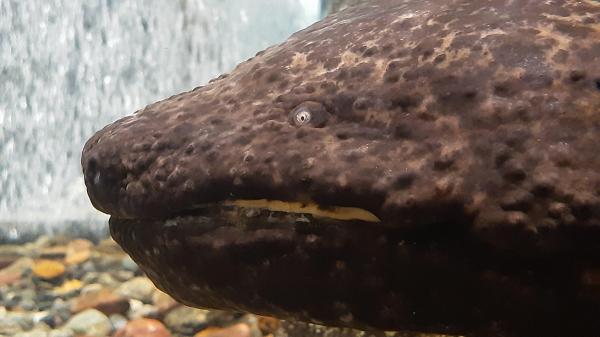
Eyes : They have small eyes with a diameter of just 1-2mm.
They have white eyes with a black pupil, and can see very well despite the small size, though it isn’t understood yet just how well.
Gills : They have gills on the side of their body.
It is thought that they are there to help increase the surface area of the skin in order to absorb more oxygen.
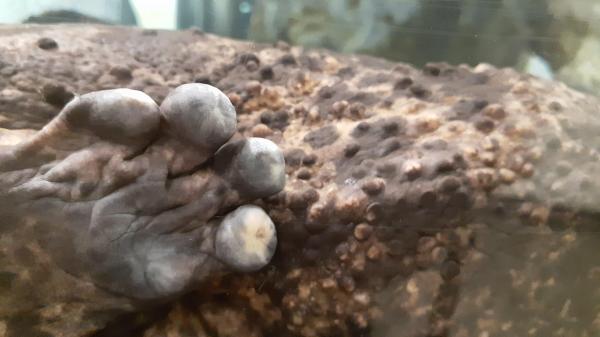
Legs : They have short legs, and move by crawling along the riverbed. Because of this, the underneath of the legs is the only place without the viscous liquid, so they don’t slip.
They have four toes on their front feet, and five on their back feet, just like a frog.
Body Surface : With a viscous liquid covering their skin, they are quite slippery.
When they are excited, a white sticky liquid secretes from the skin.
The blood vessels closer to the surface absorb oxygen through the skin.
Body : With strong muscle power, once it moves you won’t be able to catch it.
As they are cold-blooded, their body temperature is close to that of their current surrounding water.
Warts : Warts cover most of the head and body.
The warts on the body are organs down the side designed to help feel movements in the water, but the purpose of the warts on the head is not yet understood.
Nose : With a nostril facing upwards from the nose, they occasionally lift up from the water to breathe air.
They absorb oxygen both through the lungs and through their skin.
Mouth : They have a large mouth. They can capture fish and water within a moment.
Teeth : They have lots of small sharp teeth on both their upper and lower jaw.
Deeper back in their upper jaw they also have another plank-shaped set of sharp teeth.
Ears : Although you can’t see them from the outside, they have inner ears which appear to help with their sense of equilibrium.
Tail : They have a long tail that stands flat.
If they wave their tail it can create strong waves.
The tail also is used to store fat.
Cloaca : On the stomach near to the tail joint is the cloaca.
When males enter their reproductive cycle, this area swells.
Eyes : They have small eyes with a diameter of just 1-2mm.
They have white eyes with a black pupil, and can see very well despite the small size, though it isn’t understood yet just how well.
Gills : They have gills on the side of their body.
It is thought that they are there to help increase the surface area of the skin in order to absorb more oxygen.
Legs : They have short legs, and move by crawling along the riverbed. Because of this, the underneath of the legs is the only place without the viscous liquid, so they don’t slip.
They have four toes on their front feet, and five on their back feet, just like a frog.
Living Fossil
This is a Giant Salamander’s fossil from 23 millions years ago, excavated in the German town of Oeningen (or Ohningen), close to the Swiss border, as shown on the wall.
In the case is a modern Giant Salamander.
If you compare the skeletons of both they are very similar.
Even though humans have evolved from our ape ancestors over 6 million years ago, the Giant Salamander has not evolved since this fossil from 23 million years ago, giving it the name “the living fossil”.
In the case is a modern Giant Salamander.
If you compare the skeletons of both they are very similar.
Even though humans have evolved from our ape ancestors over 6 million years ago, the Giant Salamander has not evolved since this fossil from 23 million years ago, giving it the name “the living fossil”.

Breeding Behavior
Japanese Giant Salamanders generally live alone.
From the middle of August to the beginning of September, they gather in special breeding holes upstream.
The most powerful male enters the cave first, and waits for the females.
At this time, several other males also wait, and when a female enters the cave, so do they, and entangle themselves to produce the eggs.
After the breeding, they disperse, leaving only the most powerful male behind, blocking the entrance way to guard the eggs.
In the diagram below, you can see the spawning occurring on the riverside.
From the middle of August to the beginning of September, they gather in special breeding holes upstream.
The most powerful male enters the cave first, and waits for the females.
At this time, several other males also wait, and when a female enters the cave, so do they, and entangle themselves to produce the eggs.
After the breeding, they disperse, leaving only the most powerful male behind, blocking the entrance way to guard the eggs.
In the diagram below, you can see the spawning occurring on the riverside.
Nursing Behavior
The eggs are protected by the most dominant male from the end of October as they incubate, and they hatch when they are around 3cm long.
When they are born, their arms and legs have barely begun to form, so their bodies lay on the river bed, and slowly grow as the egg sac disappears.
Their legs are fully grown by the following January, and they leave their cave when the now fully-black Salamanders are around 5cm long, and explore the wintry river waters.
During that 5 month period, the dominant male continues to protect the eggs and children.
When they are born, their arms and legs have barely begun to form, so their bodies lay on the river bed, and slowly grow as the egg sac disappears.
Their legs are fully grown by the following January, and they leave their cave when the now fully-black Salamanders are around 5cm long, and explore the wintry river waters.
During that 5 month period, the dominant male continues to protect the eggs and children.
Eggs and Embryos
The eggs are roughly 5mm in diameter, and a milky white color.
The surface is said to be an animal pole (wherein cells divide and reproduce very rapidly), and is where the embryo is raised.
Underneath is a yellow-yolk looking substance, known as the vegetal pole, which is includes and stores the nutrition for the embryo.
Covering the outside of the egg is a clear jelly-looking substance, which protects the egg.
The jelly also is string-like and connects the eggs, holding them together in a large group.
Each female births from 300 to 800 eggs.
The eggs are protected by the dominant male, and develop to a 3cm salamander in roughly 2 months.
The surface is said to be an animal pole (wherein cells divide and reproduce very rapidly), and is where the embryo is raised.
Underneath is a yellow-yolk looking substance, known as the vegetal pole, which is includes and stores the nutrition for the embryo.
Covering the outside of the egg is a clear jelly-looking substance, which protects the egg.
The jelly also is string-like and connects the eggs, holding them together in a large group.
Each female births from 300 to 800 eggs.
The eggs are protected by the dominant male, and develop to a 3cm salamander in roughly 2 months.
A Day in the Life of a Giant Salamander
Giant Salamanders are nocturnal creatures.
During the day, the hide in holes in the riverbed and under rocks, and venture out into the river at night.
They lie in wait in the waters, and when a fish or river crab gets too close, within a second they catch and eat it.
When the sun rises, they return to their caves and rest.
During the day, the hide in holes in the riverbed and under rocks, and venture out into the river at night.
They lie in wait in the waters, and when a fish or river crab gets too close, within a second they catch and eat it.
When the sun rises, they return to their caves and rest.
A Year in the Life of a Giant Salamander
A salamander's year mostly focuses around it breeding.
In order to become the most dominant, males enter the caves from around the beginning of August.
At the end of August, they gather around the cave, and the larvae are born on the first of September.
The non-dominant males then split up and make their own way home.
Only the most dominant remains, in order to raise and protect the eggs.
From January to February the now grown, young salamanders leave, and the dominant male returns to his own cave.
From March to July, the Salamanders save their energy for the next mating season.
They do not hibernate.
In order to become the most dominant, males enter the caves from around the beginning of August.
At the end of August, they gather around the cave, and the larvae are born on the first of September.
The non-dominant males then split up and make their own way home.
Only the most dominant remains, in order to raise and protect the eggs.
From January to February the now grown, young salamanders leave, and the dominant male returns to his own cave.
From March to July, the Salamanders save their energy for the next mating season.
They do not hibernate.

The Life Cycle of a Giant Salamander
The Giant Salamanders grow to about 20cm in the first five years, as their gills disappear and they move to pulmonary breathing as they become adults.
This process is also known as metamorphosis.
Over the next 20 years they grow roughly 40cm, into a fully grown Salamander.
Their average life-span isn’t definitively known, but is estimated at around 100 years.
The largest size they grow to is roughly 150cm, but in the wild they tend to only grow 1cm or less a year.
It is thought that a 70cm long salamander is over 50 years old.
This process is also known as metamorphosis.
Over the next 20 years they grow roughly 40cm, into a fully grown Salamander.
Their average life-span isn’t definitively known, but is estimated at around 100 years.
The largest size they grow to is roughly 150cm, but in the wild they tend to only grow 1cm or less a year.
It is thought that a 70cm long salamander is over 50 years old.
Habitat : The Satoyama River
Most of the habitats of Giant Salamanders are found in mountainous stream, at around 350m above sea level.
For example, the upstream of Yubara’s Tabane River has a width ranging from 3-5meters of clear water running through houses and fields.
The river bank is full of ideal nesting holes and large rocks for lurking under, as well as lots of broken wood on the riverbed, which helps make an ideal home for the Giant Salamanders.
With moss and sedge growing on large boulders, alongside pussy willow, Japanese sweet flag and wasabi growing on the riverside, it is said to be a safe river close to households.
For example, the upstream of Yubara’s Tabane River has a width ranging from 3-5meters of clear water running through houses and fields.
The river bank is full of ideal nesting holes and large rocks for lurking under, as well as lots of broken wood on the riverbed, which helps make an ideal home for the Giant Salamanders.
With moss and sedge growing on large boulders, alongside pussy willow, Japanese sweet flag and wasabi growing on the riverside, it is said to be a safe river close to households.
Living Map of Giant Salamander, "Hanzaki" in Maniwa

Maniwa’s Yubara region (formerly Yubara Town) in the north of Okayama Prefecture, is known as a “hometown for Giant Salamanders”, and in 1927, alongside the areas of Chuka, Yatsuka and Kawakami (all now part of Maniwa), was designated one of the country’s protected species breeding grounds as a habitat of these Giant Salamanders.
However, due to rapid development and modernization, leading to a change in the local environment, some have said that you can no longer find any Giant Salamanders in the area.
This Living Map was created using a report that had been conducted by Okayama Prefecture, the former 4 towns with habitats, and specialists from 1995-1999 on the environment of the habitats for the Giant Salamanders, a protected species, and also surveys taken from 2013 onwards, to create a basic image of the conditions of the breeding habitats within Maniwa city.
As the surveys continue, the map is being edited and updated in real time.
However, due to rapid development and modernization, leading to a change in the local environment, some have said that you can no longer find any Giant Salamanders in the area.
This Living Map was created using a report that had been conducted by Okayama Prefecture, the former 4 towns with habitats, and specialists from 1995-1999 on the environment of the habitats for the Giant Salamanders, a protected species, and also surveys taken from 2013 onwards, to create a basic image of the conditions of the breeding habitats within Maniwa city.
As the surveys continue, the map is being edited and updated in real time.